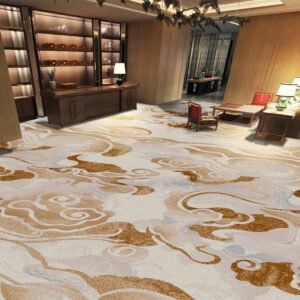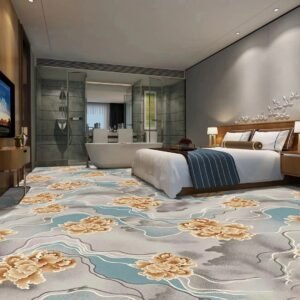
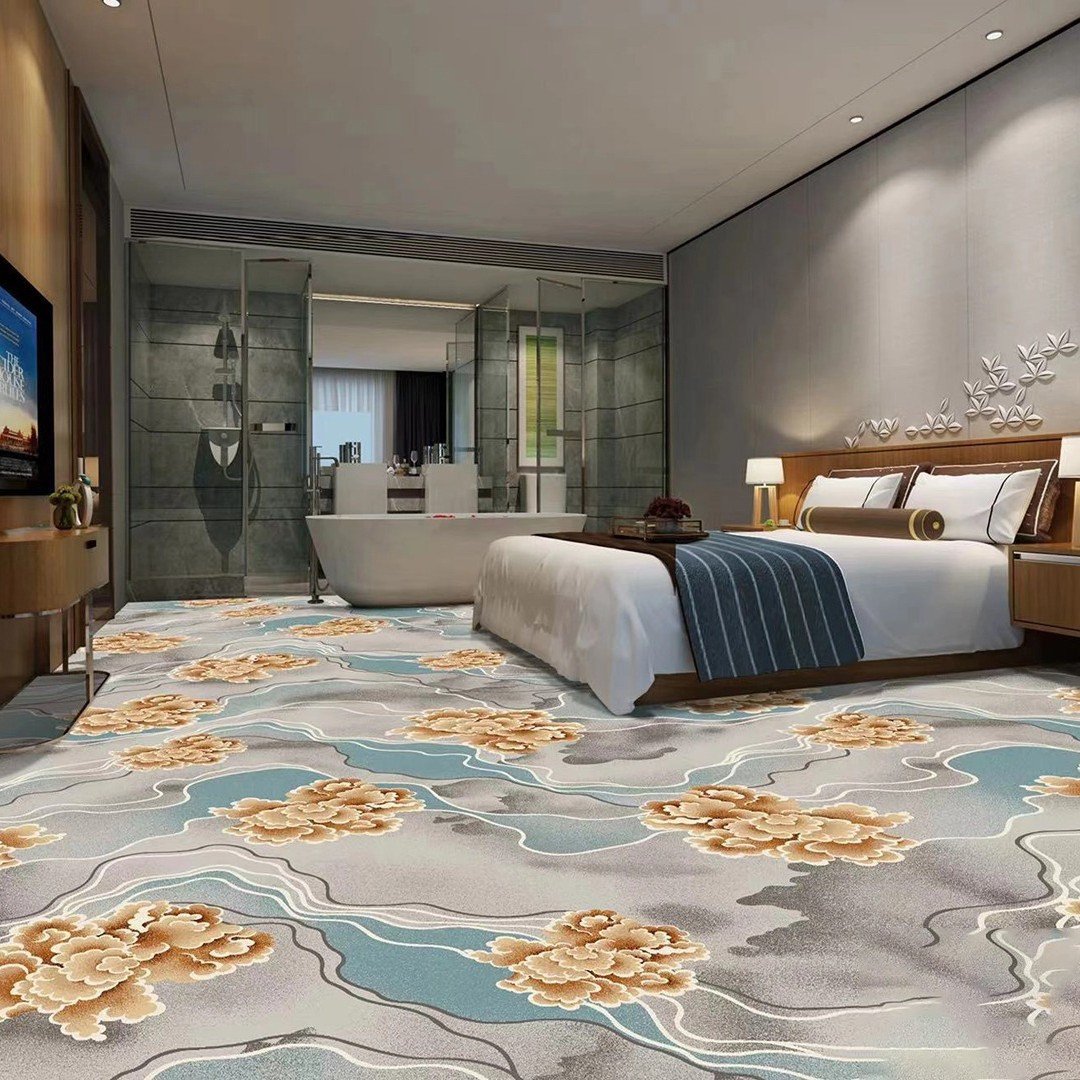
Selecting the right carpet construction is one of the most important decisions in hospitality and commercial interior projects. Among the most commonly specified options are Axminster carpets and printed carpets. While both offer strong design possibilities, they differ significantly in manufacturing methods, performance characteristics, and ideal applications.
Understanding these differences helps designers, contractors, and project owners choose the most suitable solution based on project requirements rather than appearance alone.
Understanding Printed Carpets
Printed carpets are manufactured by applying patterns onto a pre-produced carpet surface using advanced printing technologies. This method allows greater design flexibility and faster production cycles.
Printed carpets are often chosen when creative freedom, shorter lead times, or cost efficiency are priorities.
Key Characteristics
-
Flexible design possibilities
-
Faster sampling and production
-
Cost-effective for large areas
-
Suitable for medium-traffic environments
Best Applications
-
Guestrooms
-
Meeting rooms
-
Boutique hospitality spaces
-
Commercial interiors with moderate traffic
Performance Comparison
| Feature | Axminster Carpets | Printed Carpets |
|---|---|---|
| Construction | Fully woven | Surface printed |
| Durability | Very high | Medium to high |
| Pattern Complexity | Excellent | Excellent |
| Appearance Retention | Long-term | Moderate |
| Cost Level | Higher | More economical |
| Ideal Traffic Level | Heavy traffic | Medium traffic |
How to Choose Between Them
The choice between Axminster and printed carpets should depend on how the space is used.
Choose Axminster carpets when durability, longevity, and performance are critical for high-traffic areas.
Choose printed carpets when design flexibility, budget efficiency, and faster project timelines are the main priorities.
Many successful hospitality projects combine both constructions—using Axminster in public circulation areas and printed carpets in guestrooms or secondary spaces.
Axminster and printed carpets serve different but complementary roles in architectural projects. Rather than competing solutions, they work best as part of a coordinated flooring strategy aligned with functional zoning.
Selecting the right construction ensures better performance, improved lifecycle value, and a more successful interior environment overall.