Hospitality environments demand more from flooring materials than most interior spaces. Hotels must balance aesthetics, durability, comfort, maintenance efficiency, and long-term operational performance. Selecting the right carpet is therefore not only a design decision but also a technical and operational one.
This guide outlines the key factors to consider when choosing carpets for hospitality projects and how different carpet constructions perform across hotel environments.
1. Understand the Functional Requirements of Each Area
- Lobby & Reception: High traffic, strong visual impact required
- Corridors: Continuous wear and rolling luggage traffic
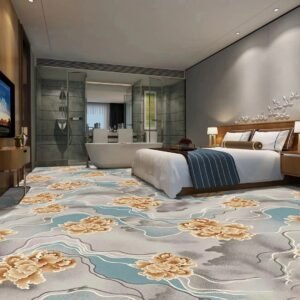
- Guestrooms: Comfort, acoustics, and residential feel
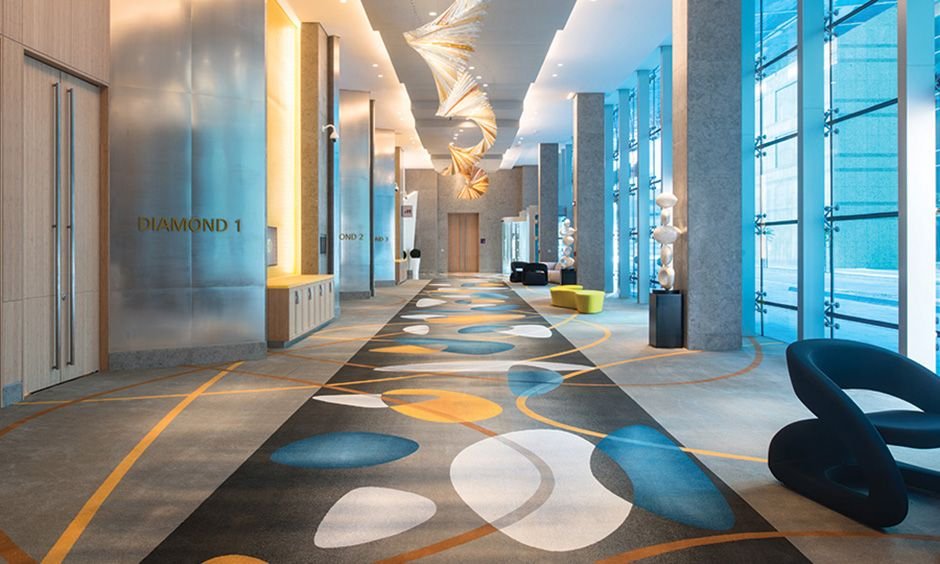
- Ballrooms & Event Spaces: Large patterns and durability
- Meeting Rooms: Balanced aesthetics and performance
2. Choose the Appropriate Carpet Construction
Different manufacturing methods result in different performance characteristics.
Axminster Carpets
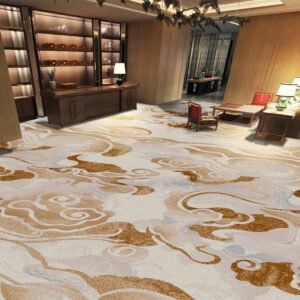
Ideal for corridors, lobbies, and public areas where heavy traffic and complex patterns are required. Known for durability and excellent pattern definition.
Woven Carpets
Provide strong structural stability and consistent appearance across large installations, suitable for hospitality interiors requiring long lifecycle performance.
Hand Tufted Carpets
Best suited for feature areas such as lobbies or VIP spaces where customized designs and texture play a major role.
Carpet Tiles
Often used in back-of-house or multifunctional areas where flexibility and easy replacement are priorities.
Selecting the right construction significantly affects maintenance costs and lifespan.
3. Consider Durability and Lifecycle Performance
Hospitality carpets must withstand continuous use. Key performance indicators include:
-
Wear resistance under heavy foot traffic
-
Color consistency over time
-
Dimensional stability
-
Ease of maintenance and cleaning
A carpet designed for project environments should maintain both appearance and structural integrity throughout its service life.
4. Evaluate Design and Pattern Strategy
Carpet design in hospitality projects serves more than decorative purposes. Patterns help manage visual flow, hide wear, and guide movement through spaces.
Large-scale patterns are often used in public areas, while guestrooms benefit from calmer textures that create comfort and relaxation.
Consistency between design intent and manufacturing capability is essential to achieve reliable results across large floor areas.
5. Focus on Installation Efficiency
For large hotel projects, installation planning is just as important as product selection.
Professional carpet manufacturing should support:
-
Area-based labeling
-
Installation sequence packing
-
Pattern alignment planning
-
Batch color control
These factors reduce onsite delays and improve installation efficiency.
6. Work with a Manufacturing-Oriented Supplier
Hospitality projects benefit from suppliers who understand production and installation requirements rather than only product supply.
A manufacturing-oriented approach ensures:
-
Accurate sampling and approvals
-
Stable mass production quality
-
Reliable delivery timelines
-
Technical support throughout the project lifecycle
Conclusion
Choosing the right carpet for hospitality projects requires balancing design vision with engineering performance. By understanding spatial requirements, selecting appropriate constructions, and planning for long-term use, project teams can create interiors that remain visually appealing and operationally efficient for years.
Well-selected carpets not only enhance guest experience but also contribute to the overall success and sustainability of hospitality environments.