In hospitality design, carpets are more than decorative finishes — they directly influence guest comfort, operational efficiency, maintenance costs, and long-term interior performance.
Because hotels consist of multiple functional spaces with different traffic levels and usage conditions, carpet selection should be based on spatial function rather than a single universal solution.
A zoning-based carpet strategy helps maintain visual quality while improving durability and lifecycle performance throughout the property.
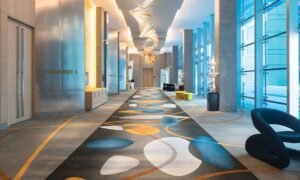
Lobby & Reception Areas
The hotel lobby serves as the first impression of the property and experiences continuous guest movement. Carpets in this area must combine strong visual identity with high durability.
Recommended Carpet Types
-
Axminster Carpets
-
Hand Tufted Carpets (feature areas)
Key Considerations
-
High wear resistance
-
Strong pattern definition and visual impact
-
Long-term appearance retention
-
Acoustic comfort in open spaces
Large-scale patterns are commonly used to reinforce spatial identity while helping conceal wear over time.
Corridors
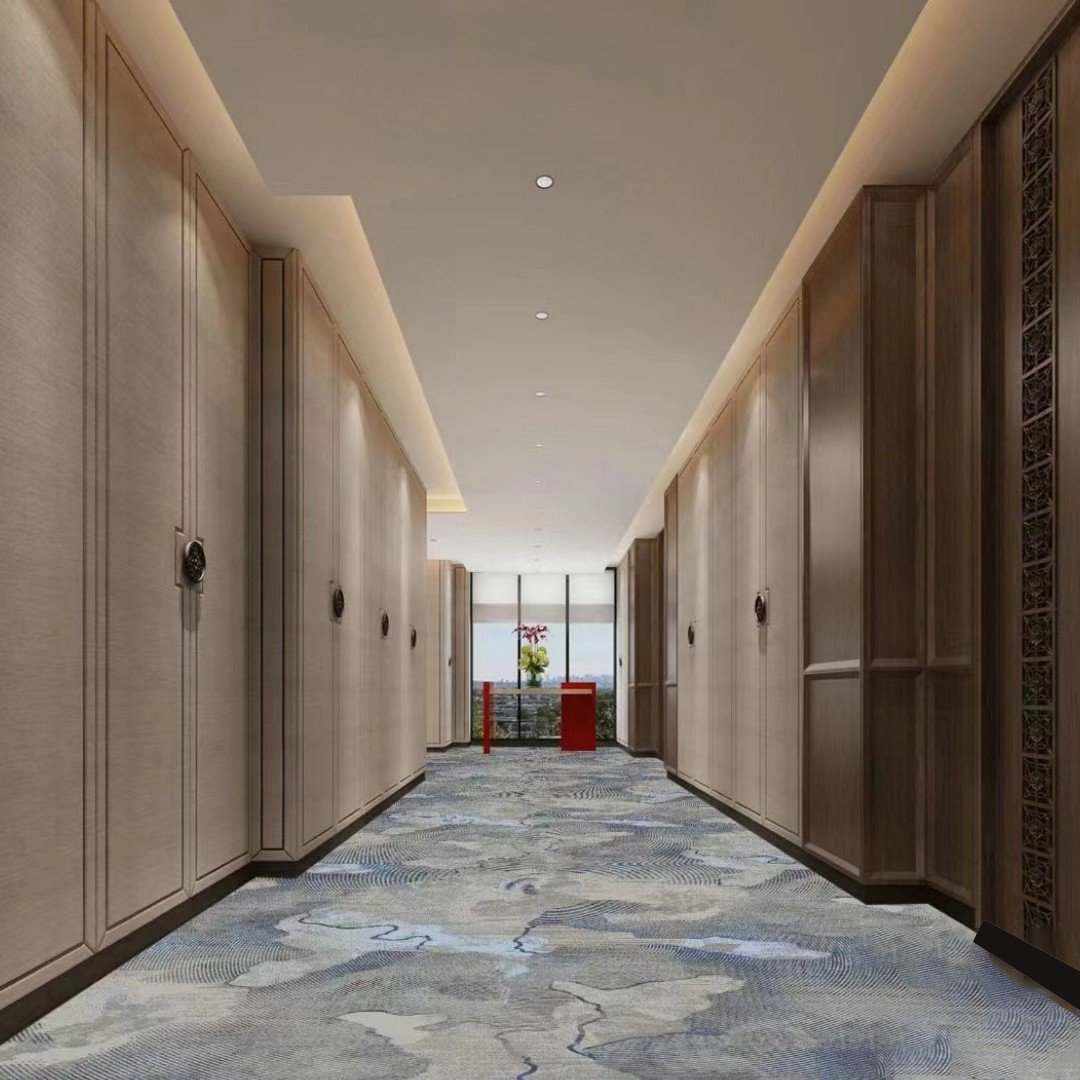
Corridors are among the highest traffic zones within a hotel, exposed to rolling luggage, housekeeping equipment, and constant circulation.
Recommended Carpet Types
-
Axminster Carpets
-
Woven Carpets
Key Considerations
-
Exceptional durability
-
Pattern continuity along long installations
-
Dimensional stability
-
Ease of maintenance
Directional patterns are often applied to enhance spatial flow and reduce visual fatigue across long passageways.
Guestrooms
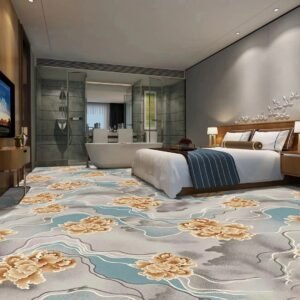
Guestrooms prioritize comfort, quietness, and a residential atmosphere. Carpets should enhance relaxation while remaining durable enough for regular maintenance cycles.
Recommended Carpet Types
-
Woven or Tufted Carpets
-
Printed Carpets
Key Considerations
-
Soft underfoot comfort
-
Noise reduction and acoustic performance
-
Calm and warm visual aesthetics
-
Practical maintenance
Subtle textures and softer color palettes are typically preferred to create a relaxing environment.
Ballrooms & Function Spaces
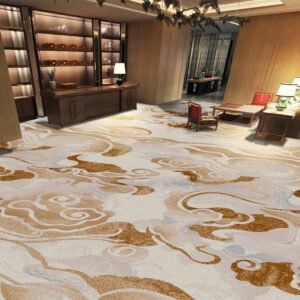
Ballrooms and multifunction spaces require carpets that support large gatherings while maintaining a strong decorative presence.
Recommended Carpet Types
-
Axminster Carpets
-
Hand Tufted Carpets
Key Considerations
-
Capability for large-scale patterns
-
High durability for event usage
-
Long-term visual stability
-
Acoustic enhancement for large interiors
Complex patterns help manage wear visibility during frequent events.
Meeting Rooms & Public Areas
Meeting rooms and shared public spaces require a balance between professional aesthetics and functional performance.
Recommended Carpet Types
-
Woven Carpets
-
Printed Carpets
-
Carpet Tiles (selected areas)
Key Considerations
-
Comfortable yet professional appearance
-
Acoustic control
-
Maintenance efficiency
-
Balanced cost-performance ratio
Why Zoning Matters in Hospitality Carpet Selection
Using a single carpet type throughout a hotel often leads to premature wear or inefficient investment. Successful hospitality projects treat carpets as a zoned system, selecting constructions based on real usage conditions.
A zoning strategy helps to:
-
Extend carpet lifespan
-
Reduce maintenance costs
-
Maintain visual consistency
-
Improve overall guest experience
Choosing carpets for hotel interiors requires understanding how each space functions differently. Lobbies demand visual impact and durability, corridors require structural strength, guestrooms emphasize comfort, and event spaces balance performance with design expression.
A well-planned carpet strategy ensures both aesthetic success and long-term operational efficiency across hospitality environments.